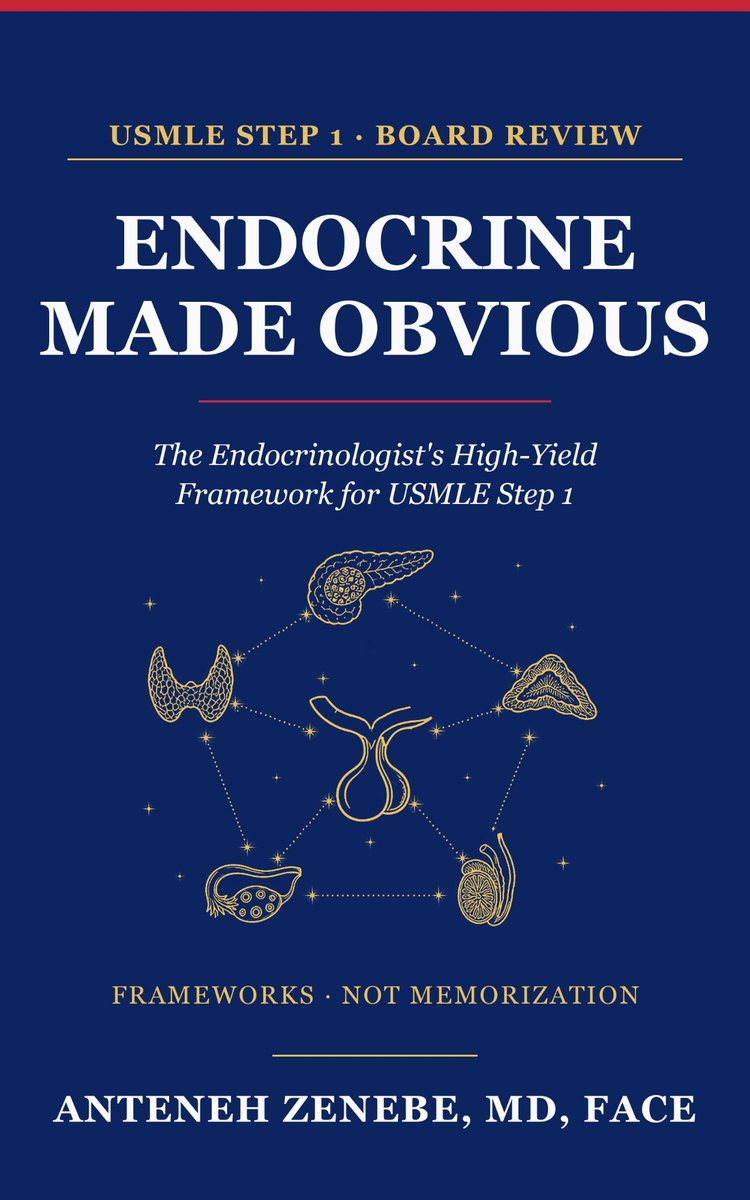
One architecture, not a list of facts
Most students meet endocrinology as a list to memorize: hormones, deficiencies, excesses, eponyms. That is not how I think about it in clinic, and it is not how I teach my fellows. I teach it as one architecture.
Learn the four-layer axis once, and every gland in this book follows the same logic. You stop memorizing each disorder on its own and start reasoning from the structure they all share.
Every disease, read as a lab pattern
Each disease is taught as a signature lab pattern: the combination of results that points to one answer and argues against the others. That is how Step 1 asks the question, and it is how I read a patient's labs on the wards.
One framework, from Step 1 to the boards
The framework does not expire after the exam. The same reasoning carries onto the wards and into the boards, so what you build for Step 1 keeps working for you long after it.
Checked and dated
Every threshold and first-line therapy in the book is verified against the issuing society or the FDA, and dated. When a number changes, you will know which guideline it came from and when.
Frameworks, not memorization.
For educational use only, not medical advice.
What is inside
- Acknowledgments
- Introduction
- How to Use This Book
Chapter 1
The Endocrine Mindset
How to think like an endocrinologist on Step 1
Chapter 2
The Hypothalamic-Pituitary Axis
The master control room
Chapter 3
The Thyroid
Patterns that always repeat
Chapter 4
Calcium, Parathyroid, and Bone
The four-variable loop
Chapter 5
The Adrenal Gland
Two glands sharing an address
Chapter 6
Diabetes and the Endocrine Pancreas
The most cross-cutting topic on Step 1
Chapter 7
Reproductive Endocrinology and MEN Syndromes
The gonadotropin fork — and the book’s longest thread
Chapter 8
Integration, Pharmacology, and The Final 48 Hours
The capstone — putting it all together for test day
- References and Further Reading
- Index
- About the Author
Read an excerpt
From the Introduction
Endocrinology is the one system on Step 1 that somehow feels both simple and completely unmanageable at the same time.
The axes all look identical. The vignettes pile on labs, a family history, and a physical finding, and you are expected to hold all of it in your head while the clock runs. You can know the thyroid biosynthetic pathway cold and still freeze when the same pathway shows up inside a pituitary question. The issue is usually not missing facts. It is missing a usable structure.
This book is that structure.
It is not another disease list. It does not replace First Aid or UWorld. It installs the frameworks a working endocrinologist actually uses while the vignette is still unfolding. Once those are in place, the details have somewhere to stick.
Excerpt from Endocrine Made Obvious. Copyright © 2026 by Anteneh W. Zenebe.
Questions about the book
Who is Endocrine Made Obvious for?
Medical students preparing for USMLE Step 1. It teaches how to think about endocrine vignettes on the exam, and it can be read during a dedicated study period, as a final pass before the test, or alongside a preclinical endocrine block.
What is in each chapter?
Every chapter is built the same way: an opening case, the framework, the diseases placed on that framework, an integration moment, one observation from practice called The Endocrinologist’s Lens, numbered key takeaways, and five or six NBME-style questions with an analysis of every option.
What formats is it in, and where can I buy it?
Kindle ($9.99) and paperback ($24.99), both on Amazon. The paperback's ISBN is 979-8-234-27845-6. It is published by CardioMetabolic Core LLC.
How does the book relate to MedBoard Pro?
They have the same author. The book builds the reasoning and the MedBoard Pro question bank tests it with board-style questions. The free endocrinology questions on this site need no account; they come from the ABIM Endocrinology bank.
Is it part of a series?
Yes. Endocrine Made Obvious is Book 1 of a series.
Is this medical advice?
No. The book is for educational use only and is not medical advice.
About the author
Anteneh Zenebe, MD, FACE, is an endocrinologist, board-certified in internal medicine and in endocrinology, diabetes and metabolism. He teaches endocrinology fellows and is the founder of MedBoard Pro.
Read the framework, then practice it
The book builds the reasoning. The question bank tests it under exam conditions, with every answer explained the same way.
Try free endocrinology questions →Also by Dr. Zenebe
For general readers
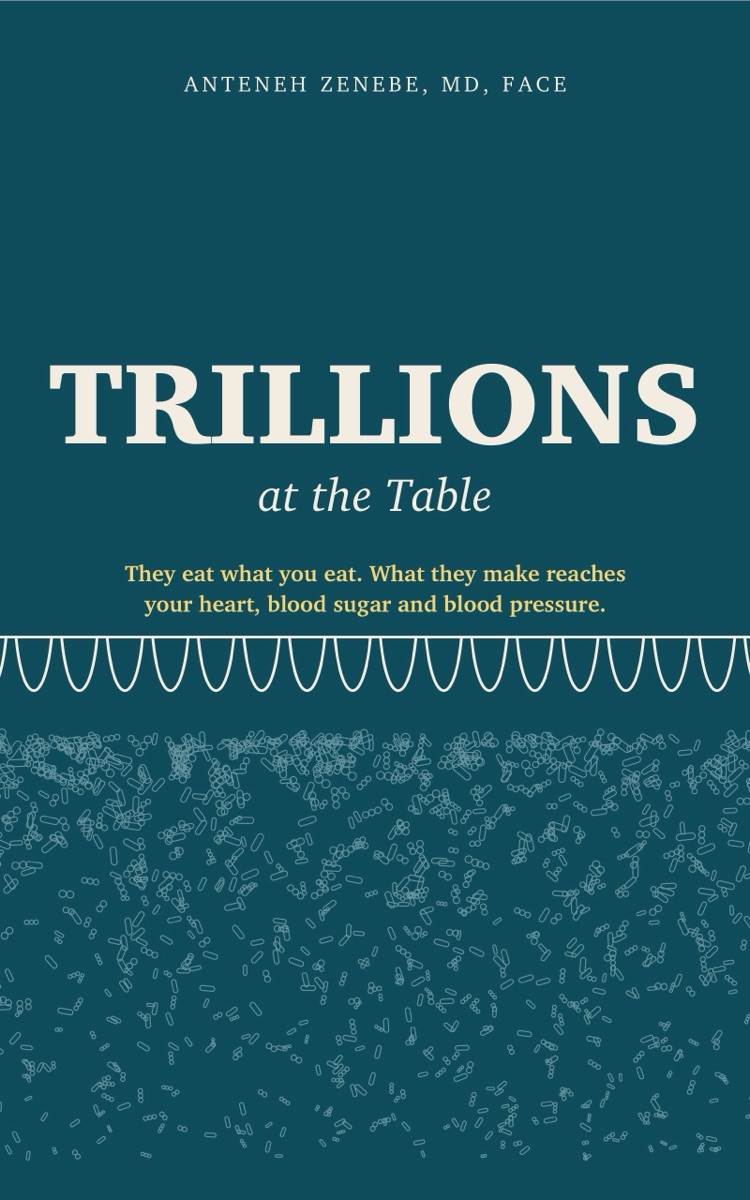
They eat what you eat. What they make reaches your heart, blood sugar and blood pressure. A book for general readers on the gut bacteria behind cardiometabolic health.
Buy on Amazon →Kindle $7.99 · Paperback $17.99All books by Dr. Zenebe on Amazon →
New books by email
Leave your email address to hear when Dr. Zenebe publishes a new book. We email you book announcements only.